




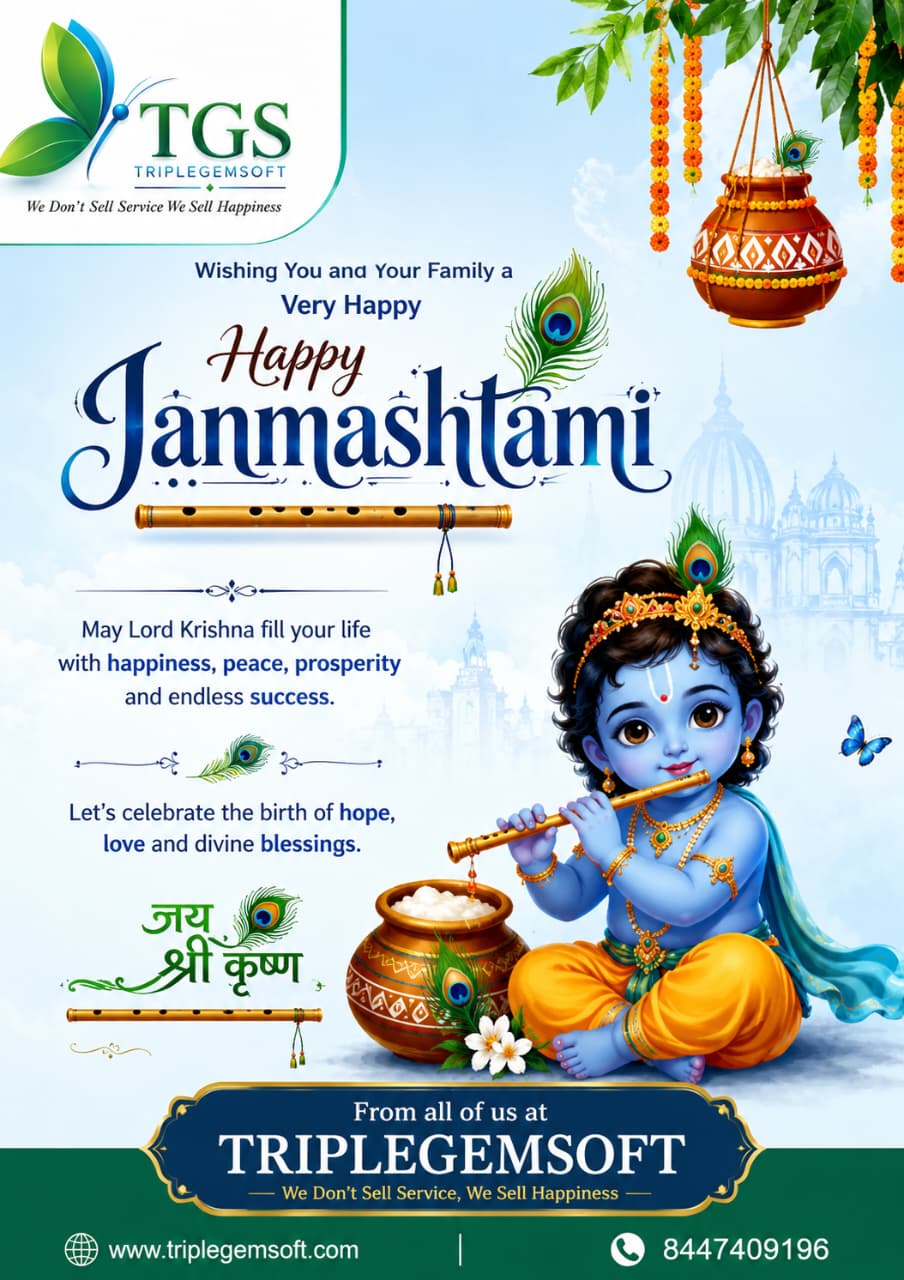
Janmashtami 2026 is a sacred Hindu festival celebrated with devotion and enthusiasm to commemorate the birth of Lord Krishna. The festival is also known as Krishna Janmashtami, Gokulashtami, Krishnashtami and Krishna Jayanti.
In 2026, Janmashtami is being celebrated on Friday, 4 September 2026 across most parts of India. The celebration traditionally focuses on the midnight birth of Lord Krishna, devotional prayers, fasting, bhajans, temple decorations and the sharing of festive prasad.
For devotees, Janmashtami is not simply a festival—it is a celebration of faith, righteousness, love, compassion and spiritual wisdom. At TriplegemSoft, we wish everyone a peaceful, joyful and blessed Janmashtami.
What Is Janmashtami?
Janmashtami is the annual festival commemorating the birth of Lord Krishna, who is revered in Hindu tradition as the eighth avatar of Lord Vishnu. The festival is especially important within the Vaishnavism tradition and is celebrated in homes, temples and communities across India and around the world.
The name Janmashtami combines the ideas of birth and the eighth lunar day. The festival is associated with the eighth day of the dark fortnight of the Hindu lunar month, with the exact calendar month designation varying according to regional calendar traditions.
When Is Janmashtami 2026?
Krishna Janmashtami 2026 falls on Friday, 4 September 2026. Because Hindu festival dates depend on lunar calculations and local observances, some regions or traditions may extend celebrations into 5 September.
The midnight period is particularly significant because Krishna’s birth is traditionally commemorated at night. For exact fasting and puja timings, devotees should follow their local panchang or the timings announced by their temple.
In Mathura and the Braj region, Janmashtami is celebrated with elaborate temple decorations, devotional music, kirtans, Rasleela performances and midnight celebrations.
Why Is Janmashtami Celebrated?
According to Hindu religious tradition, Krishna was born in Mathura at a time when King Kamsa’s tyranny had created fear and suffering. His birth represents the restoration of hope and the triumph of righteousness over evil.
Krishna’s teachings later became central to the Bhagavad Gita, where he explains ideas related to duty, selfless action, devotion and spiritual wisdom.
Therefore, Janmashtami reminds devotees to bring positive values into everyday life and to face challenges with courage, wisdom and faith.
The Story of Lord Krishna’s Birth
Krishna’s Birth in Mathura
According to the traditional narrative, Lord Krishna was born to Devaki and Vasudeva in Mathura. Devaki’s brother Kamsa feared a prophecy that Devaki’s child would become the cause of his downfall.
Because of this fear, Kamsa imprisoned Devaki and Vasudeva. When Krishna was born, Vasudeva carried the newborn child from Mathura toward Gokul, crossing the Yamuna to protect him from Kamsa.
The story of Krishna’s birth and Vasudeva’s journey across the Yamuna is one of the most widely represented episodes in Indian religious art and storytelling.
Krishna’s Childhood in Gokul and Vrindavan
Krishna’s childhood stories are filled with playful and memorable episodes involving Yashoda, Nanda, the Gopis, cows, friends and the people of Gokul and Vrindavan.
Stories about Krishna’s love for butter, his flute, his friendship with the people of Braj and his playful nature have become an important part of Indian cultural traditions.
How Is Janmashtami Celebrated?
Fasting and Devotional Practices
Many devotees observe a fast during Janmashtami and spend the day in prayer, meditation, bhajan, kirtan and reading or listening to stories associated with Krishna.
Fasting practices can vary according to individual health, family traditions and religious customs. People who are fasting should follow practices appropriate for them.
Midnight Krishna Puja
The most important moment of many Janmashtami celebrations is the midnight Krishna Janma celebration. Temples and homes may perform abhishek of the infant Krishna idol, offer clothes and ornaments, conduct aarti and place the deity in a decorated cradle.
The midnight celebration symbolically welcomes Krishna’s divine birth with devotional singing, bells, conch sounds and prayers.
Bhajans and Kirtans
Devotional singing is an important part of Janmashtami celebrations. Families and temple communities often sing Krishna bhajans and participate in kirtans until midnight.
Traditional Krishna-related performing arts also form an important part of India’s cultural celebrations. For example, Krishna stories are represented through song and dance traditions in different regions of India.
Dahi Handi
Dahi Handi is a popular cultural celebration associated particularly with Maharashtra and some other parts of India. Inspired by stories of Krishna’s childhood love of butter and playful activities, participants form human pyramids to reach and break a suspended pot.
The event represents teamwork, enthusiasm and community participation and has become one of the most recognizable public celebrations associated with Krishna’s childhood.
Janmashtami Celebrations in Mathura and Vrindavan
Mathura, Vrindavan and the wider Braj region hold a special place in Krishna traditions. During Janmashtami, temples and streets are decorated with flowers and lights, while devotees participate in prayers, bhajans, kirtans and cultural performances.
Major temples and religious sites in the region become important centres of celebration, attracting devotees who want to experience the spiritual and cultural atmosphere of Braj.
Spiritual Significance of Janmashtami
Janmashtami teaches several timeless values that can be applied beyond the festival itself.
Victory of Good Over Evil
Krishna’s birth is traditionally associated with the restoration of dharma and the defeat of oppressive forces. It reminds people that truth and righteousness should be protected even during difficult times.
Importance of Duty
Krishna’s teachings in the Bhagavad Gita emphasize performing one’s responsibilities sincerely while maintaining a balanced mind.
Faith and Devotion
Janmashtami encourages devotees to strengthen their connection with spirituality through prayer, devotion, service and positive actions.
Love and Compassion
Krishna’s stories emphasize relationships, friendship, compassion and devotion. These values continue to make the festival meaningful for families and communities.
Janmashtami Decoration Ideas for Home
You can create a beautiful Krishna-themed festive atmosphere at home without making the decoration complicated.
- Create a small Krishna jhula or cradle.
- Decorate the puja area with flowers and lights.
- Use peacock-feather-inspired decorations.
- Create small footprints representing Bal Gopal.
- Prepare a simple Krishna-themed rangoli.
- Use traditional diyas and decorative torans.
- Keep the decoration clean, peaceful and devotional.
Traditional Janmashtami Bhog and Prasad
Families prepare different types of festive food and bhog according to regional and family traditions. Commonly associated offerings include milk-based sweets, makhan, mishri, fruits and other vegetarian preparations.
In many celebrations, prasad is shared with family members, friends and devotees after the religious ceremony. The focus is on devotion and sharing rather than elaborate arrangements.
Happy Janmashtami Wishes from TriplegemSoft
On the auspicious occasion of Krishna Janmashtami 2026, TriplegemSoft extends warm wishes to everyone celebrating this beautiful festival.
Janmashtami Wishes
May Lord Krishna bless your life with happiness, peace, prosperity and wisdom. May His divine flute fill your heart with love and positivity. Happy Janmashtami 2026!
May the blessings of Shri Krishna bring new hope, success and happiness to you and your family. Happy Krishna Janmashtami!
May Kanha guide you towards truth, kindness and righteousness and fill every moment of your life with joy. Jai Shri Krishna!
On this sacred occasion, may your home be filled with devotion, your heart with peace and your life with endless blessings. Happy Janmashtami from TriplegemSoft!
Short Janmashtami Status
“Where there is Krishna, there is hope, wisdom and peace. Happy Janmashtami!”
“Let the divine melody of Krishna’s flute bring happiness into your life. Jai Shri Krishna!”
Celebrate Festivals Through Digital Communication
Festivals are also a wonderful opportunity for businesses and organizations to connect with customers, employees and communities through meaningful digital communication.
Businesses can share festive greetings through professional websites, social media campaigns, email marketing, SMS communication and other digital channels.
TriplegemSoft provides digital communication and technology solutions including SEO, social media marketing, bulk SMS, WhatsApp communication, voice call services and website development.
Explore TriplegemSoft Services
Why Digital Festival Greetings Matter for Businesses
Festival-based communication can help brands maintain a positive connection with their audience when the content is respectful, useful and relevant.
Build Brand Engagement
Festive posts can give businesses an opportunity to communicate their values and connect with their audience beyond direct sales messages.
Strengthen Customer Relationships
A thoughtful Janmashtami greeting can be used as a simple customer-engagement touchpoint.
Reach Customers Through Multiple Channels
Businesses can combine website content, social media, email and messaging campaigns to distribute festive content across different customer touchpoints.
Janmashtami FAQs
Q1. When is Janmashtami 2026?
Krishna Janmashtami 2026 is observed on Friday, 4 September 2026 in most Indian observances. Some regional and religious traditions may differ in how the date is observed because festival timings are based on the Hindu lunar calendar.
Q2. Why is Janmashtami celebrated at midnight?
According to traditional belief, Lord Krishna was born around midnight. Therefore, many devotees perform the main birth celebration and puja around the midnight period.
Q3. Who was Lord Krishna?
Lord Krishna is one of the most revered figures in Hinduism and is traditionally regarded as the eighth avatar of Lord Vishnu. His teachings, particularly those presented in the Bhagavad Gita, have had a profound influence on Indian spiritual and philosophical traditions.
Q4. What are the main Janmashtami rituals?
Common observances include fasting, Krishna puja, abhishek, devotional singing, reading religious texts, decorating temples or homes, midnight birth celebrations and distributing prasad. Customs vary by region and family tradition.
Q5. What is Dahi Handi?
Dahi Handi is a popular public celebration inspired by stories of Krishna’s childhood. Teams form human pyramids to reach and break a pot suspended above the ground. It is particularly associated with Maharashtra.
Q6. Where is Janmashtami celebrated?
Janmashtami is celebrated widely across India and by Hindu communities around the world. Mathura and Vrindavan are especially significant because of their connection with Krishna traditions.
Q7. What should I post on social media for Janmashtami?
You can share a respectful Krishna-themed greeting, an inspirational message, a Janmashtami quote, a festive image, information about the festival or a message wishing happiness and peace to your audience.