




India’s 80th Independence Day will be observed on 15 August 2026, marking another important milestone in the country’s journey since independence from British rule in 1947. Independence Day is celebrated every year on 15 August and holds a special place in India’s national life.
For Indians across the country and around the world, 15 August is more than a national holiday. It is a day to remember the sacrifices of freedom fighters, celebrate India’s democratic journey and reflect on the responsibilities of citizens toward the nation’s future.
When Is the 80th Independence Day of India?
India will celebrate its 80th Independence Day on Saturday, 15 August 2026.
India became independent from British rule on 15 August 1947. Since then, Independence Day has been observed annually on 15 August as one of the country’s most significant national occasions.
The Government of India’s official portal identifies 15 August as India’s Independence Day and provides information related to the national celebration.
Why Is Independence Day Celebrated on 15 August?
Independence Day commemorates India’s independence from British colonial rule.
The date 15 August 1947 represents a historic turning point when India became an independent nation. The day reminds citizens of the long freedom struggle and the sacrifices made by countless individuals who contributed to India’s independence.
It is also an opportunity to think about the country’s progress and the responsibilities associated with freedom.
History of India’s Independence Day
India’s freedom movement developed over several decades and involved leaders, revolutionaries, social reformers, students, workers and ordinary citizens.
The freedom struggle included major movements such as:
- Non-Cooperation Movement
- Civil Disobedience Movement
- Quit India Movement
- Swadeshi and other nationalist movements
- Numerous revolutionary and regional movements
Mahatma Gandhi played a major role in India’s mass movements through the principles of non-violence and civil resistance. At the same time, many other leaders and freedom fighters made significant contributions to India’s independence.
The Quit India Movement of 1942, launched under Mahatma Gandhi’s leadership, became one of the major final phases of the independence struggle. Historical material published by the Prime Minister’s Office also records Gandhi’s call for the British to leave India in August 1942.
India’s National Flag and Independence Day
The Indian Tricolour is one of the most recognizable symbols of the country’s identity and independence.
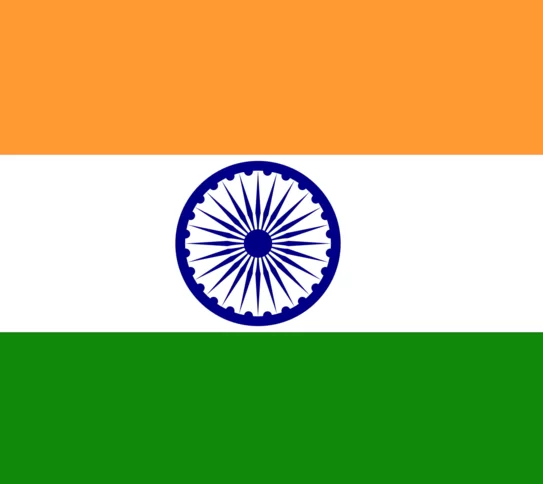
India’s present national flag was adopted by the Constituent Assembly on 22 July 1947, shortly before independence. It consists of saffron, white and green horizontal bands with the navy-blue Ashoka Chakra at the centre.
How Is Independence Day Celebrated in India?
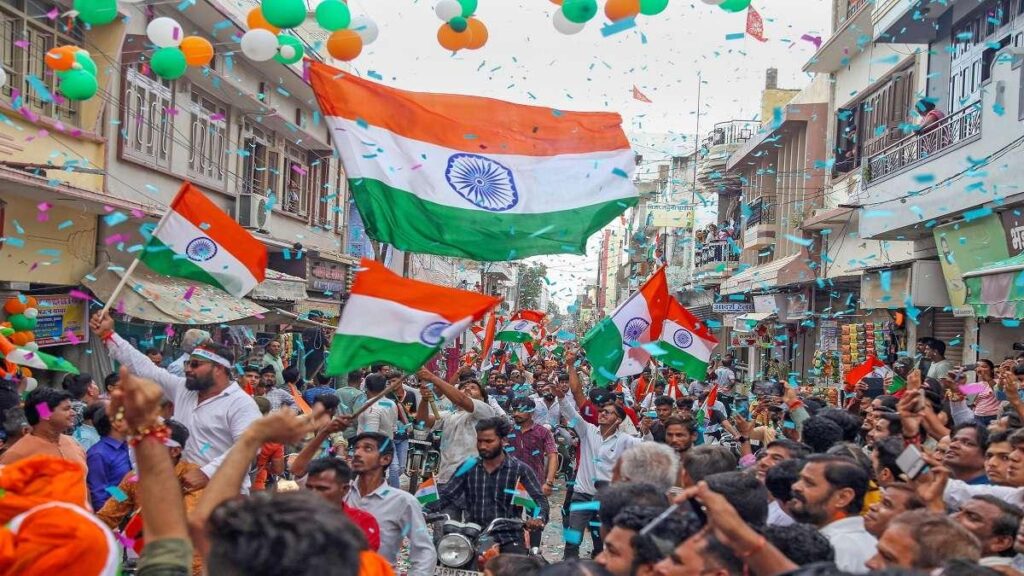
Independence Day celebrations take place across India in schools, colleges, government institutions, offices, residential communities and public spaces.
Common activities include:
1. Flag Hoisting
The national flag is hoisted at government institutions, educational institutions and other organizations.
2. National Anthem
The national anthem is performed as part of many Independence Day ceremonies.
3. Cultural Programmes
Schools and organizations conduct:
- Patriotic songs
- Dance performances
- Speeches
- Essay competitions
- Drawing competitions
- Cultural programmes
- Freedom-fighter presentations
4. Red Fort Ceremony
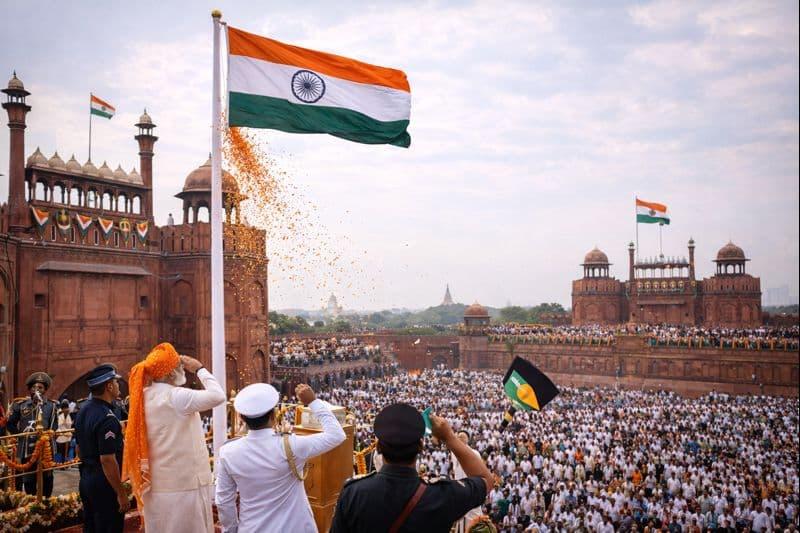
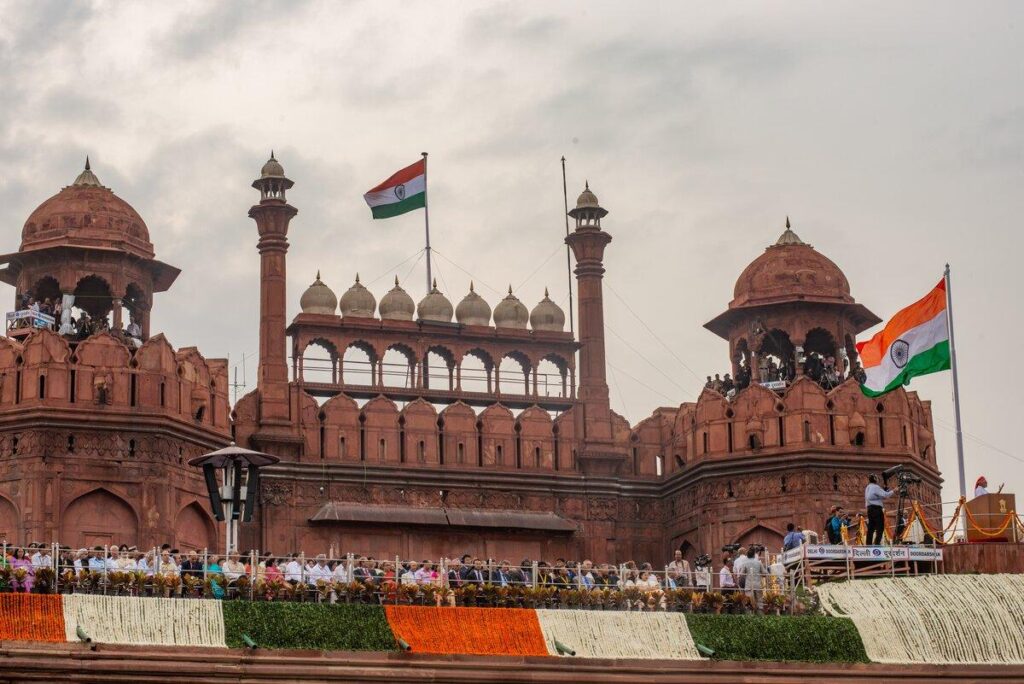
The national-level celebration traditionally centres around the Red Fort in New Delhi, where the Prime Minister addresses the nation.
The Prime Minister’s 2025 Independence Day address from the Red Fort highlighted themes including self-reliance, innovation, youth opportunities and India’s long-term development vision.
Independence Day 2026 and India’s Digital Future
For a technology company such as TriplegemSoft, Independence Day also provides an opportunity to reflect on India’s transformation through technology.
Digital technology has become an important part of modern India, influencing:
- Digital payments
- E-governance
- Online education
- Healthcare technology
- Artificial intelligence
- Cloud computing
- Cybersecurity
- Mobile applications
- Digital businesses
- Software development
- Startup innovation
Role of Technology in Building a New India
Technology can help create a more connected and efficient society.
Modern software solutions can support businesses through:
Digital Transformation:
Organizations can move traditional processes to efficient digital platforms.
Automation:
Repetitive business processes can be automated to improve productivity.
Artificial Intelligence:
AI can support data analysis, customer service, content generation and business decision-making.
Cloud Technology:
Cloud platforms allow businesses to build scalable applications and services.
Mobile Applications:
Mobile apps provide convenient access to services and information.
Cybersecurity:
Secure digital infrastructure is essential as India’s digital ecosystem continues to expand.
Independence Day 2026: A Message for the Youth
Young people are an important part of India’s future.
Students, developers, entrepreneurs, researchers, designers and skilled professionals can contribute to India’s growth through innovation and responsible use of technology.
The Prime Minister’s 2025 Independence Day address placed particular emphasis on youth opportunities, skill development, employment and innovation.
The journey toward a stronger India requires not only economic growth but also education, skills, innovation, entrepreneurship and responsible citizenship.
Independence Day and the Vision of a Developed India
Independence Day also provides an opportunity to look beyond history and think about India’s future.
India’s development journey involves several important areas:
- Education and skill development
- Digital infrastructure
- Innovation and research
- Manufacturing
- Entrepreneurship
- Sustainable development
- Healthcare
- Infrastructure
- Employment
- Technology
How Businesses Can Celebrate Independence Day 2026
Companies can celebrate Independence Day while also promoting positive social and professional values.
Some ideas include:
- Organizing a flag-hoisting ceremony
- Sharing patriotic messages
- Conducting employee activities
- Supporting social initiatives
- Promoting digital literacy
- Organizing educational programmes
- Supporting local entrepreneurs
- Publishing informative content about India’s development
- Sharing Independence Day creatives on social media
Independence Day 2026 Wishes
Here are some professional Independence Day messages that businesses can use:
“May the spirit of freedom, unity and innovation inspire us to build a stronger and brighter India. Happy 80th Independence Day 2026!”
“Let us remember the sacrifices of our freedom fighters and contribute to India’s progress through knowledge, innovation and responsible citizenship. Happy Independence Day!”
“From freedom to innovation, India’s journey continues. Let us work together toward a stronger, smarter and more developed India. Happy Independence Day 2026!”
Why Independence Day Still Matters
Independence Day is not simply about remembering the past.
It encourages citizens to think about:
Freedom — valuing the rights and opportunities provided by independence.
Unity — respecting India’s diversity and strengthening national unity.
Responsibility — understanding that freedom comes with responsibilities.
Innovation — creating solutions that contribute to India’s future.
Nation Building — contributing positively through education, work, entrepreneurship and social responsibility.
Frequently Asked Questions
Q1. When is India’s 80th Independence Day in 2026?
India’s 80th Independence Day will be celebrated on 15 August 2026.
Q2. Why is Independence Day celebrated on 15 August?
India became independent from British rule on 15 August 1947, making 15 August the country’s Independence Day.
Q3. Is 15 August 2026 a national holiday in India?
Yes. Independence Day is observed as a national holiday, and the Government of India’s 2026 holiday calendar lists Independence Day in August.
Q4. Where is India’s main Independence Day celebration held?
The principal national ceremony traditionally takes place at the Red Fort in New Delhi, where the Prime Minister addresses the nation.
Q5. Who hoists the national flag on Independence Day?
At the national ceremony at the Red Fort, the Prime Minister of India traditionally hoists the national flag and addresses the nation.
Q6. What does the Indian Tricolour represent?
The national flag consists of saffron, white and green bands with the navy-blue Ashoka Chakra at the centre. The official Know India portal provides details about the flag’s design and history.
Q7. What is the significance of Independence Day?
It commemorates India’s independence and honours the sacrifices made during the freedom struggle while encouraging citizens to contribute to the country’s future.
Q8. What is India’s vision for 2047?
The Viksit Bharat 2047 vision focuses on India’s long-term development and the ambition of building a developed nation by 2047.